
Design or evolution? From bathing engines to beach huts
Not everything is always as it seems. A peak into the past revealed a story to delight and inspire me - and perhaps you too?

This article may be truncated or lose some of the images if you are reading this in an email. You can read more in your email by clicking on"View entire message" or read it directly on Substack.
I’m still recovering from minor surgery, so another week away from the workbench. On the positive side, that leaves me with more time to write, browse my collection of old photographs and continue my exploration of how wood has shaped the history of Britain. I’m taking you to the beach this week.
Once we start making things, it’s not long before we begin to think about the design of what we are going to make. But in the world around us, many familiar objects exist not because of a single coherent design, but as the result of an organic evolution over many years. “How Buildings Learn” by Stewart Brand had a major impact on me when I first came across it twenty years ago. Published in 1994, it’s still in print. The book touches on two related concepts that I believe are fundamental to the good design of almost anything we make: resilience and flexibility.
As Brand explains and illustrates, the buildings that tend to be the most successful over time are those that have evolved organically. They shed unneeded ornamentation, comfortably absorb reconfiguration and allow the repurposing of rooms, walls and structural elements. These buildings shrink or expand to fit the needs of their inhabitants. Or, if no longer fit for purpose, they are pulled down.

The book’s primary focus is on residential and commercial buildings. The humble wooden beach hut is a common sight today around the coast of the UK. It too has an intriguing history of adaptability and survival. Brand didn’t cover beach huts in his book, so here is my attempt to fill that gap.
On the beach
Here in the UK, we are rarely far from the coast, but sunny days are less frequent and unpredictable. If we fancy a day beside the seaside, we have to take our chances with the weather, which often means embracing the wind, clouds and rain. Like earlier generations, we can wear warm clothes and rent a deckchair (jackets and ties no longer required). Or we can try to find a beach hut to brew up some tea and find shelter.
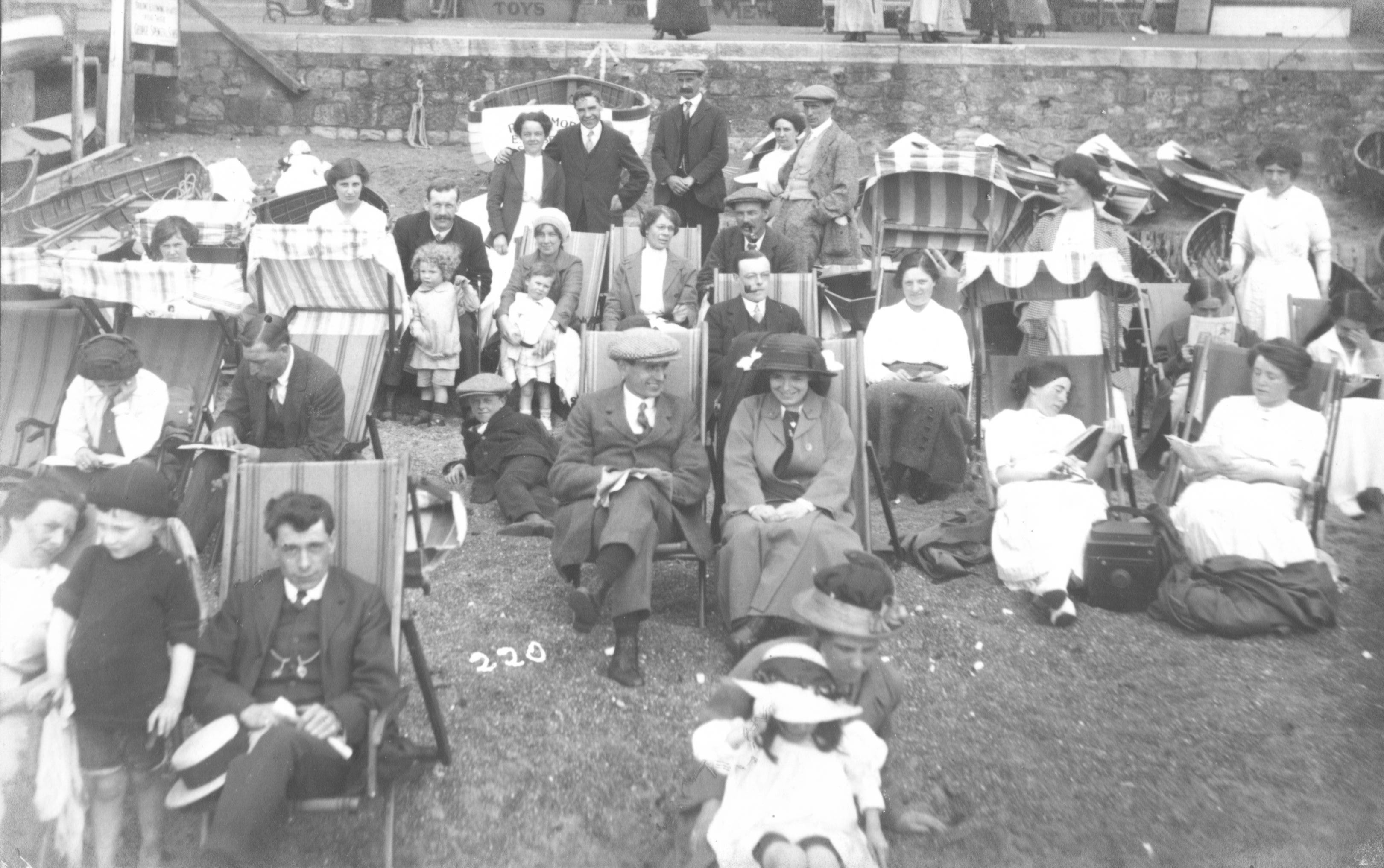
I collect old photographs. Most of what I am showing here is from my own collection. Where possible, I buy original vintage prints. I also buy period postcards when I am focussing on one specific topic as I am here. I am particularly attracted to pictures that show a way of life, or scenes, that have either disappeared or changed dramatically.
Most commonly, I am drawn to bridges, steam engines, ancient ruins, ships, farming and military. I prefer pictures with people, or at least some sign of life. Some of my favourite pictures are of beach scenes.
One of the delights of “How Buildings Learn” is the photographs which show how individual buildings have evolved over many years. Looking at my own collection recently, I realised that I’d been staring at something obvious for many years without realising it. The story of the evolution of the bathing machine to the beach hut.
Wet, wet, wet
Despite the cold water and sometimes biting wind, swimming in the sea has long been popular in Britain. Before we had swimming costumes, people swam naked. That’s not a problem once you are in the water, but for the royal family, or those who care about what other people think, it would have been awkward getting in and out of the sea. So around 1750, the bathing engine was invented.
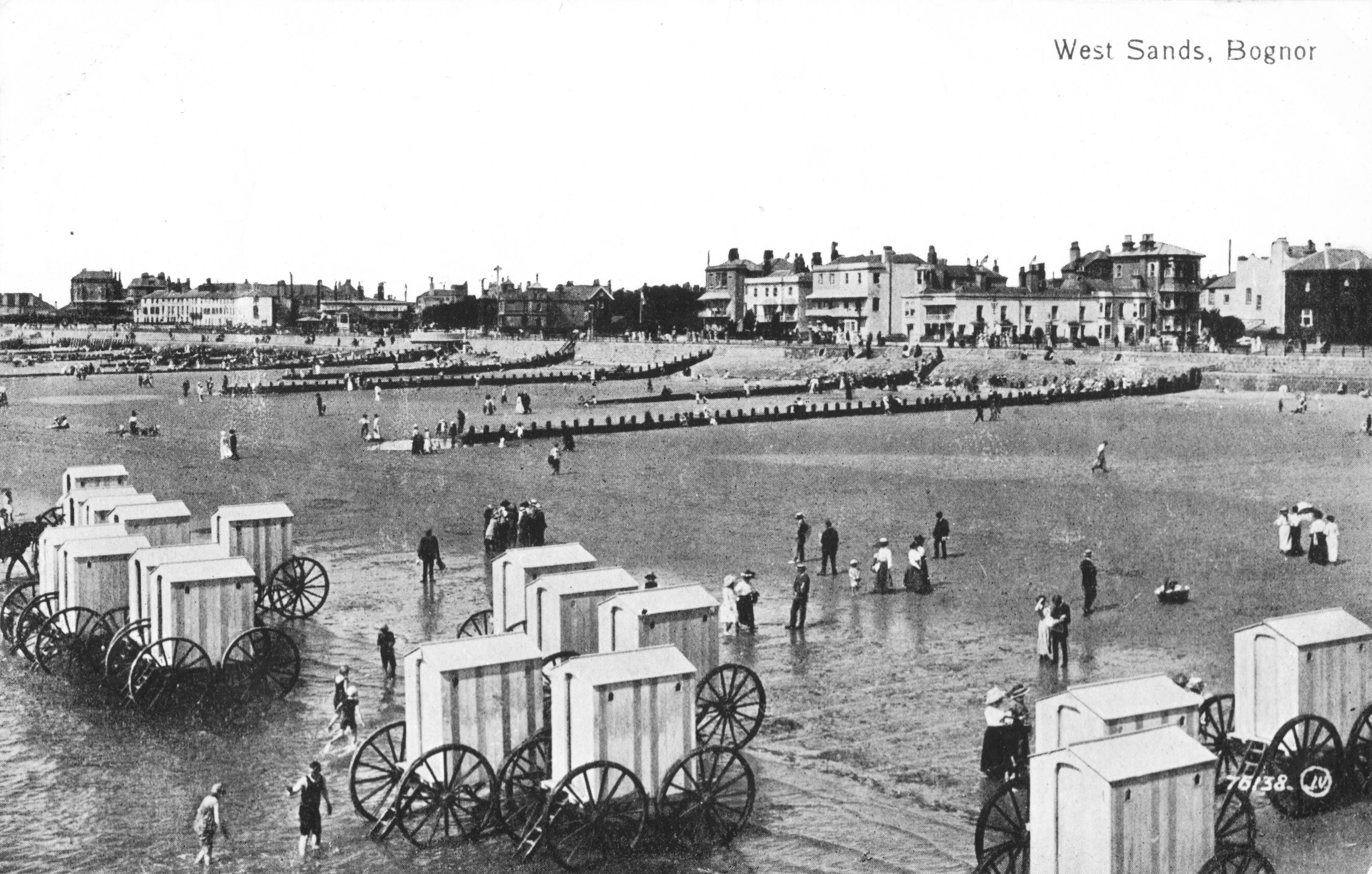
A bathing engine, as you can see is a hut on wheels. They were usually pulled by a horse down the beach and into the water. You enter fully clothed from the beach side, get changed in private, then drop into the water discreetly on the seaward side.
By the 19th century, swimming costumes were available, but bathing engines still remained popular all around the coast of the UK and in Europe too. Popular resorts such as Brighton on the English south coast had a hundred or more.
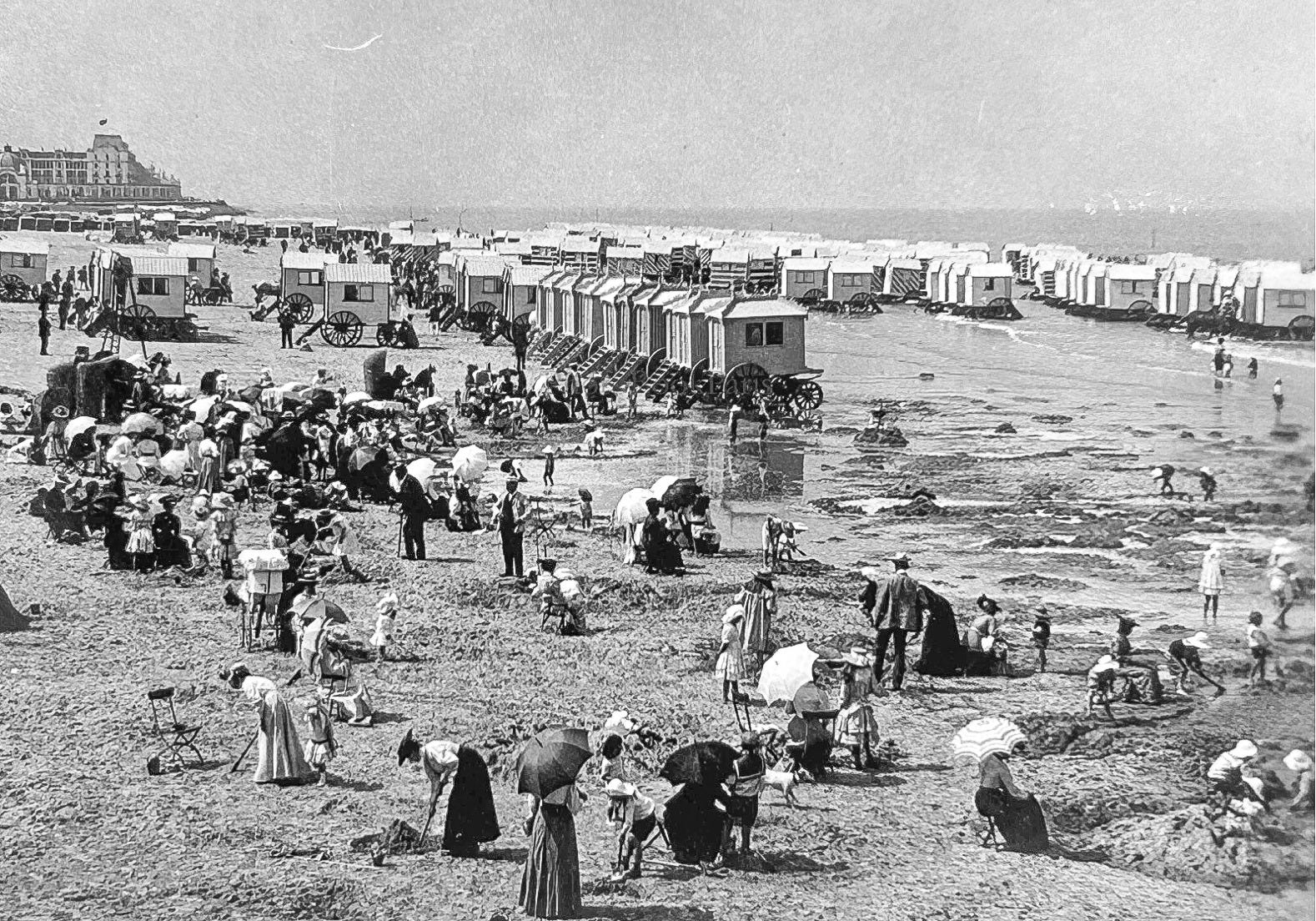
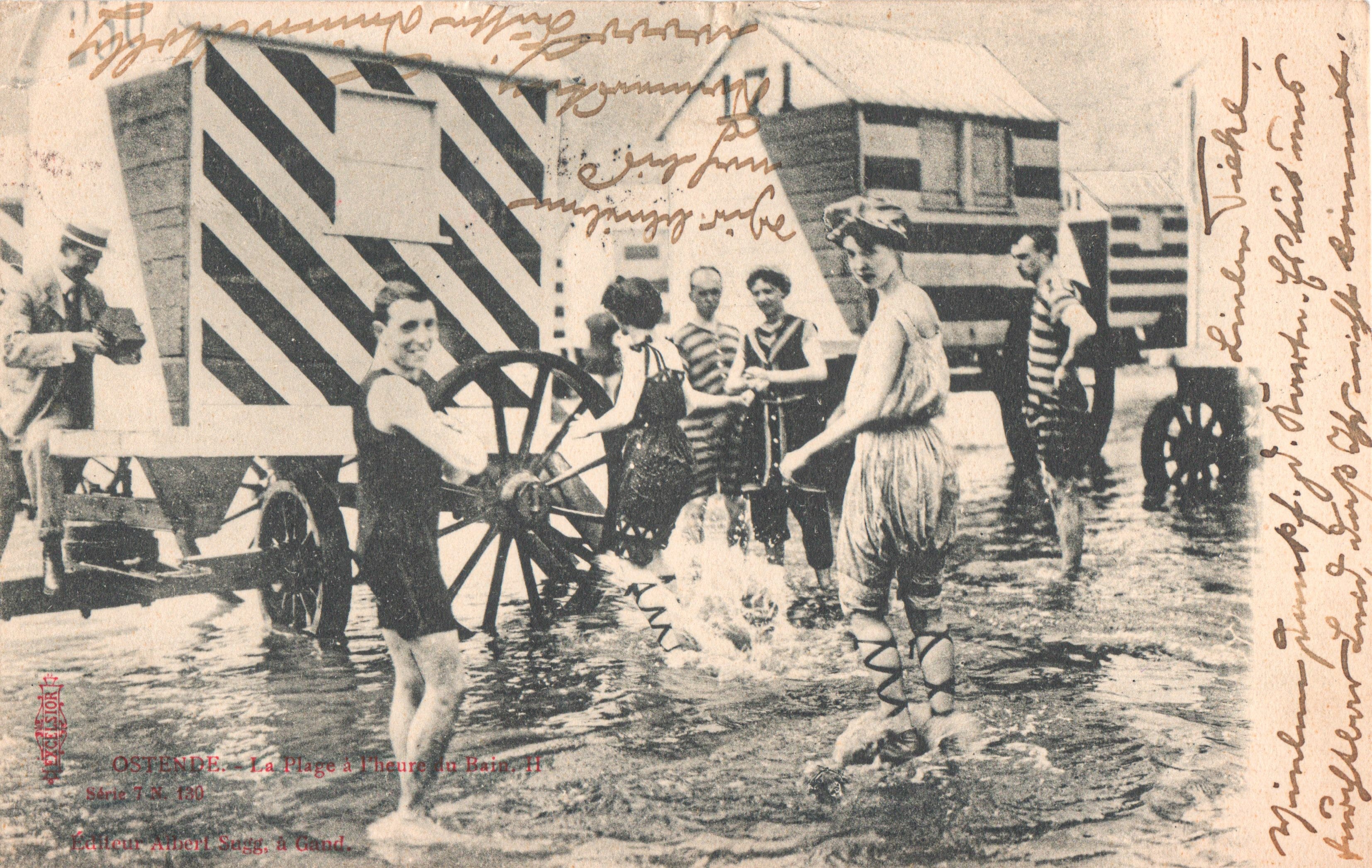
We may complain about too many people on the beach today, but at least our views are not blocked by ranks of bathing machines as they would have been in the past at places like Ostend in Belgium.
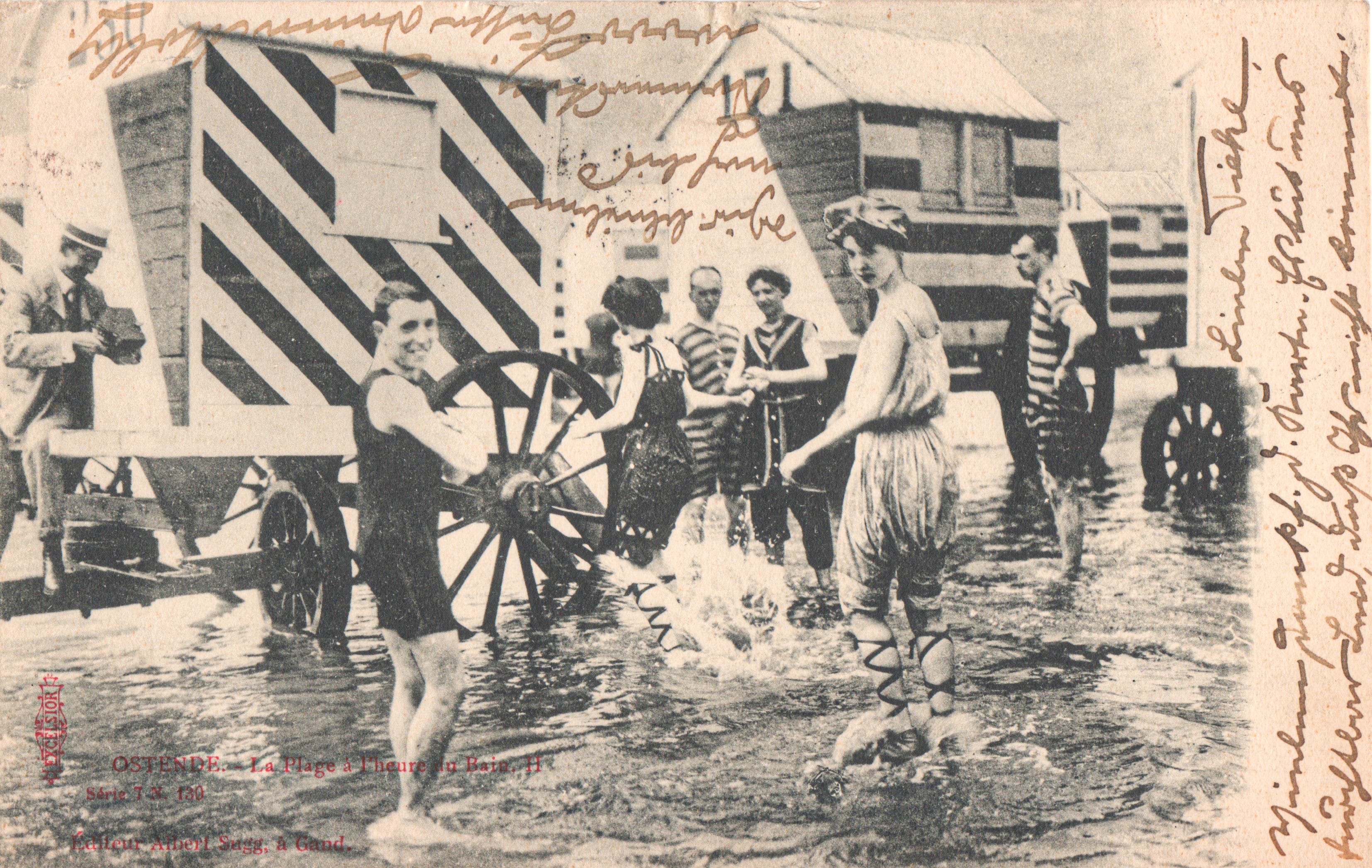
Bathing engines remained popular for a surprisingly long time, well after their original purpose of preserving modesty had become irrelevant. This other postcard of bathers from Ostend in Belgium was posted in 1903 - similarly painted machines can be seen in the distance in the previous picture. People clearly knew how to have fun in those pre-war days, and not much risk of sunburn in those outfits. We British seem to have been a lot more restrained.
Further along the coast from Ostend, we come to Calais in France. Curiously, these bathing machines seem to be aligned along the waves, not facing out to sea. Note also the smaller wheels at the front in these continental machines, rather than the 4 large wheels in the British ones. Much more manoeuvrable.
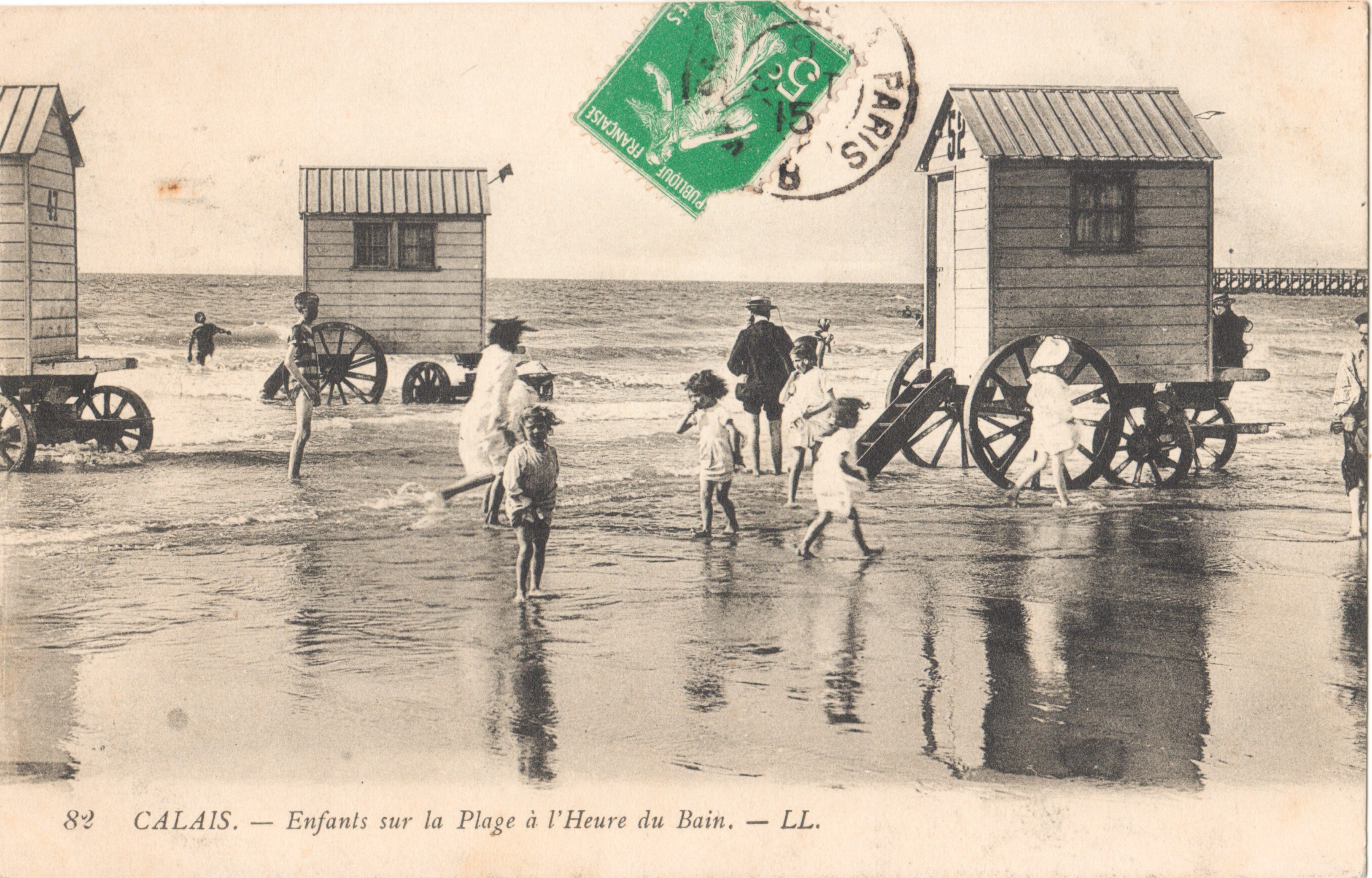
Old habits may have died hard, but with the start of the First World War in 1914, many beaches were closed to the public, the horses and men went off to war and trips to the sea came to an end. The bathing engines, drawn up to the edge of the beach at the start of the war, were destined never again to return to the water’s edge.
Travelling through time
I started investing more time (and money) in collecting old photographs 5 years ago and I’ve been inspired by the idea of a time series. Typically, I’ll start with one photo that I am drawn to for its merits alone. Then I keep an eye out for other images, of the same location and similar views to what I already have, but which have been taken at a different time. I prefer original photographs, those that were printed at the same time as they were taken, and in the largest format, similar to A4 or US letter size. Finding good quality photographs over one hundred years old at an affordable price is a rare treat, so I’ll also buy postcards and smaller photos1 if printed close to the date when originally taken.
Appley Beach in Shanklin is on the Isle of Wight, off the south coast of Britain. I’ve never been there, but I’ve got to know it quite well. This large-format, original vintage photograph below was the first one I bought of Shanklin. You can see the bathing engines in action. This has been a popular view for photographers over the years, and it’s become one of the time series I collect. Through the photographs and postcards, we see the bathing engines move up from the beach, slowly evolving into the wooden huts that replaced them2.
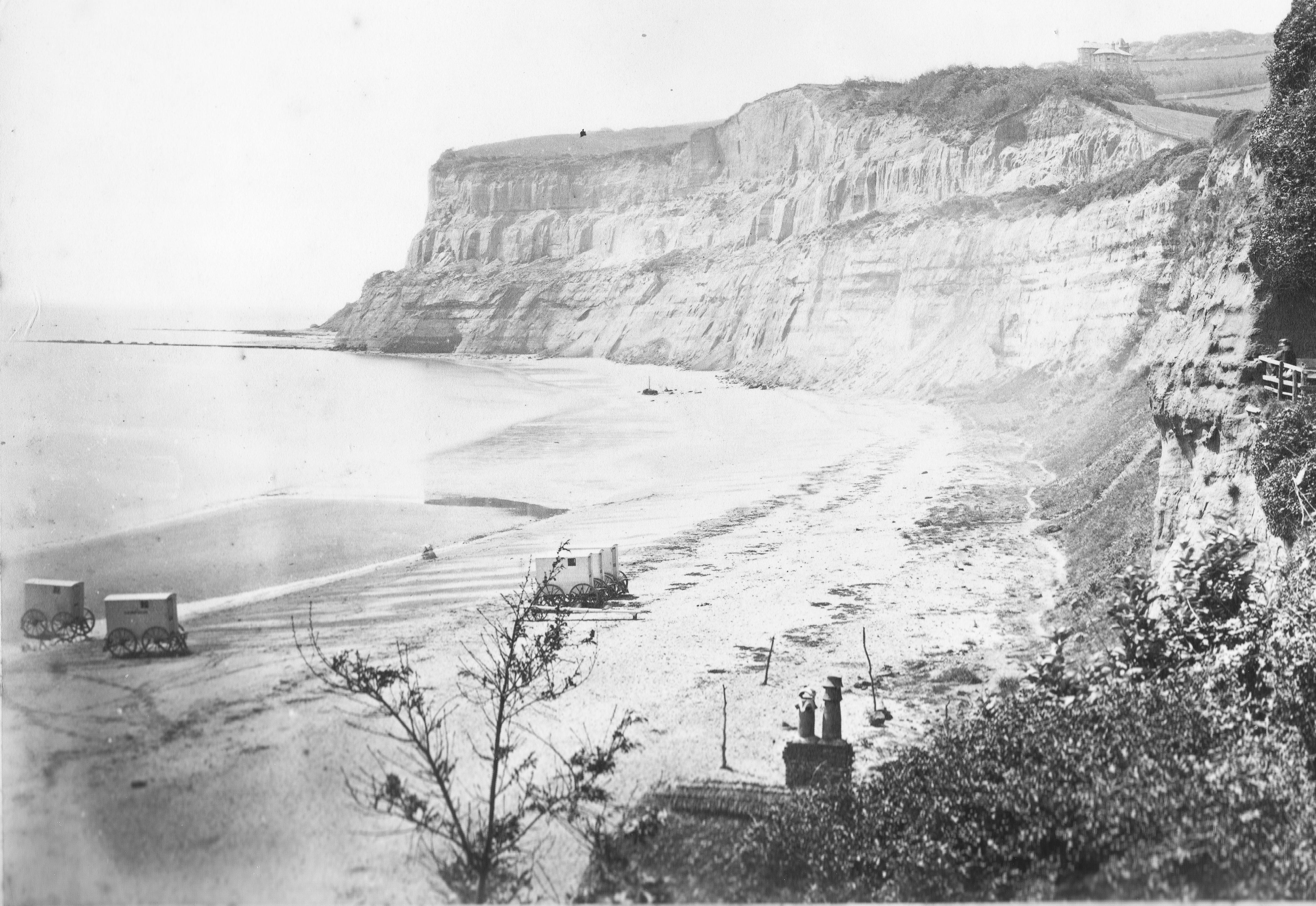
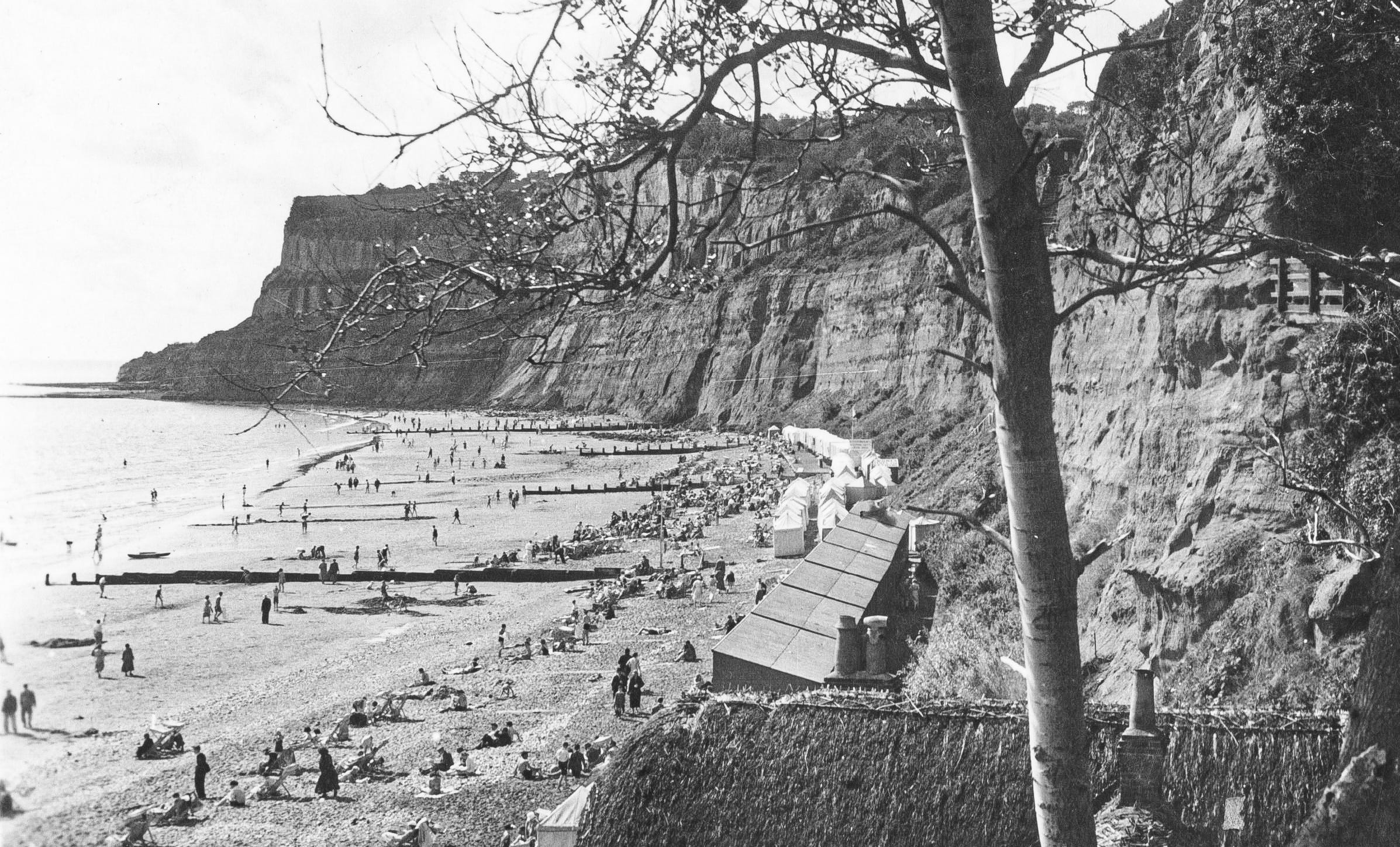
Woodworkers know how easily metal tools corrode, often just from moisture in the air. Bathing engines were usually owned by local businesses that would rent them out by the day. With their iron fittings, timber construction and regular immersion in salt water, maintenance must have been a full-time job. Slacken off on that, and bits would start to drop off.
So what happened to these bathing engines - and why do we care?
Stuck in the middle with you
Once the First World War ended, swimsuits were available to all. No one needed to swim naked. The bathing machines still provided shelter and a place to change, but there was neither the enthusiasm nor the financial return of towing them down the water, and moving them every couple of hours to match the rising or falling tide.
Over time, the now redundant wheels would have rotted away or been sold for scrap. The original bathing machines took on a new, simpler life, not much more than huts, as shown below. Then, as the wood rotted, they would have been rebuilt entirely.
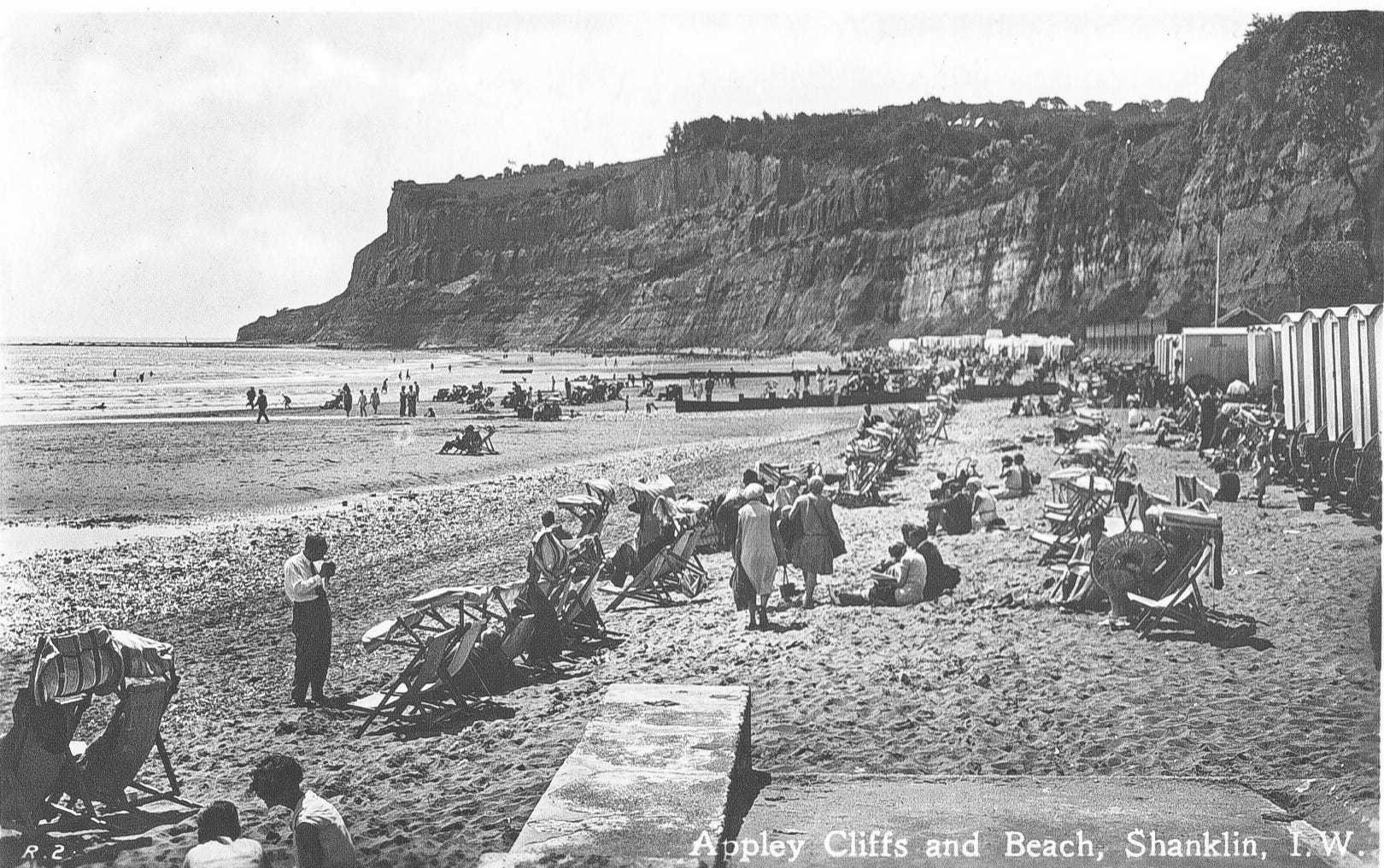
As we can see from this beach level view of Shanklin, a postcard sent in July 1931, the huts, still with wheels intact, are parked up on the beach. Further along in the distance is a row of new huts, catering for the growing demand for static changing rooms. And a place to make tea.
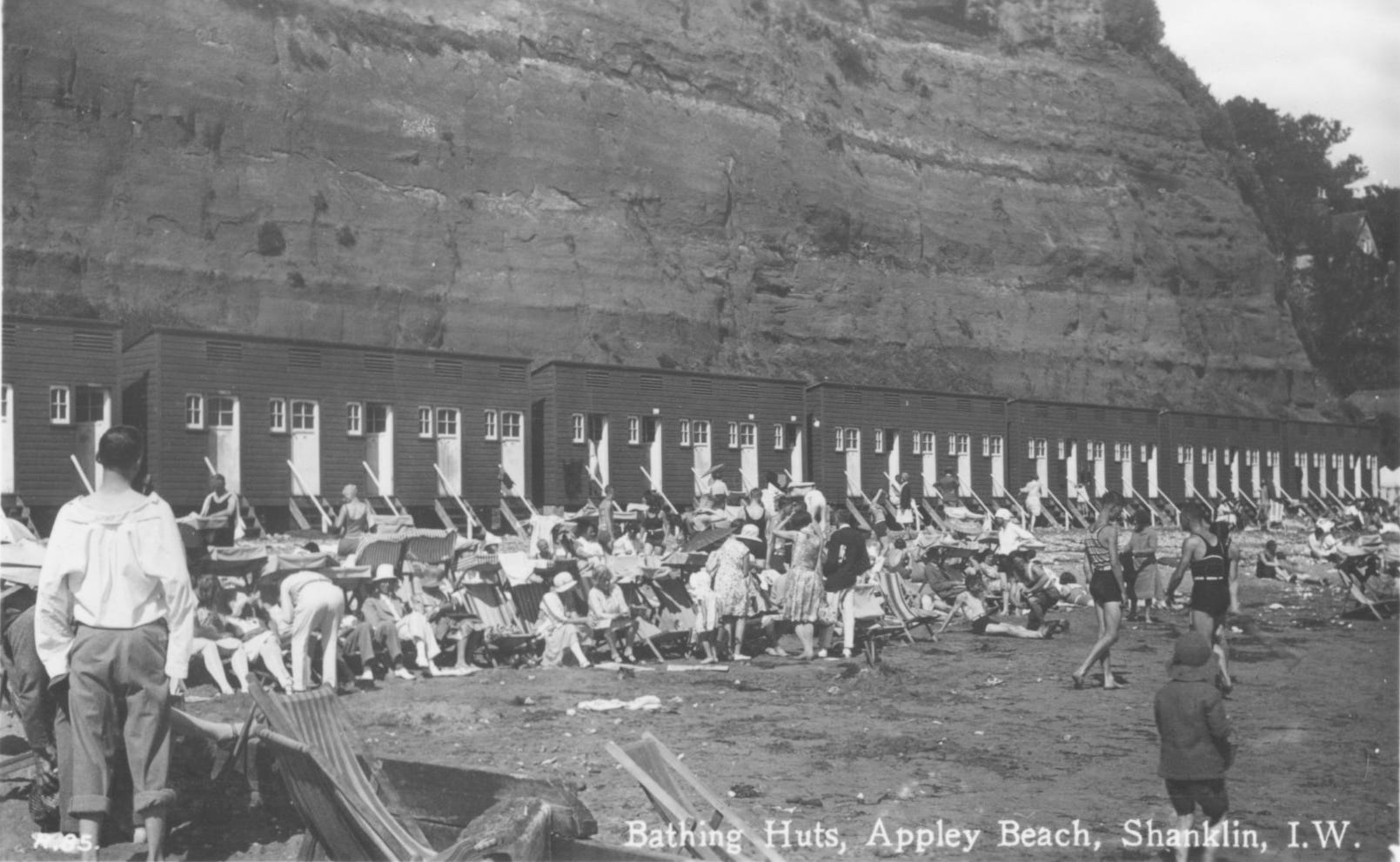
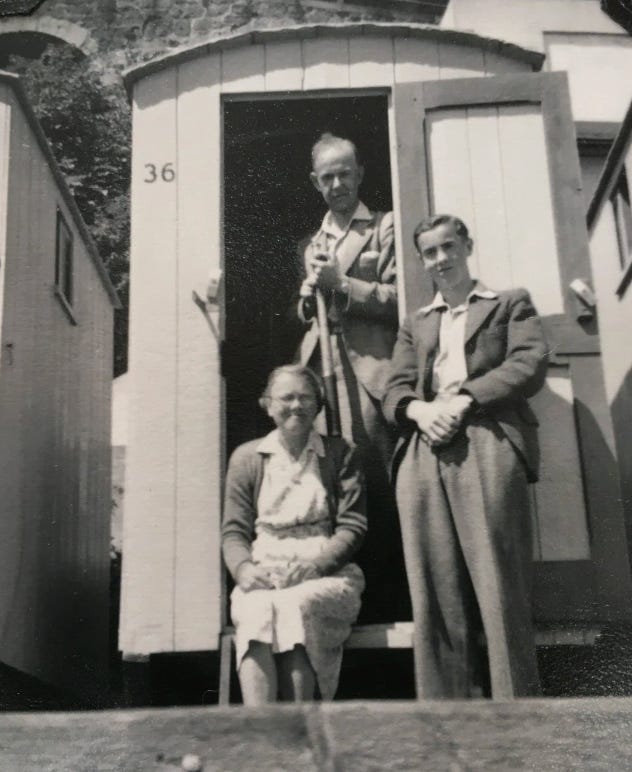
At some time later, those bathing machines have fully metaphorised into just huts. The wheels seem to have gone, but I suspect these are the same machines we saw at Shanklin in the previous photos. The roof and windows look identical. This is an original photograph, so no postage stamp and no date on the label, but those shirt collars suggest this is late 1930s or maybe early post Second World War.
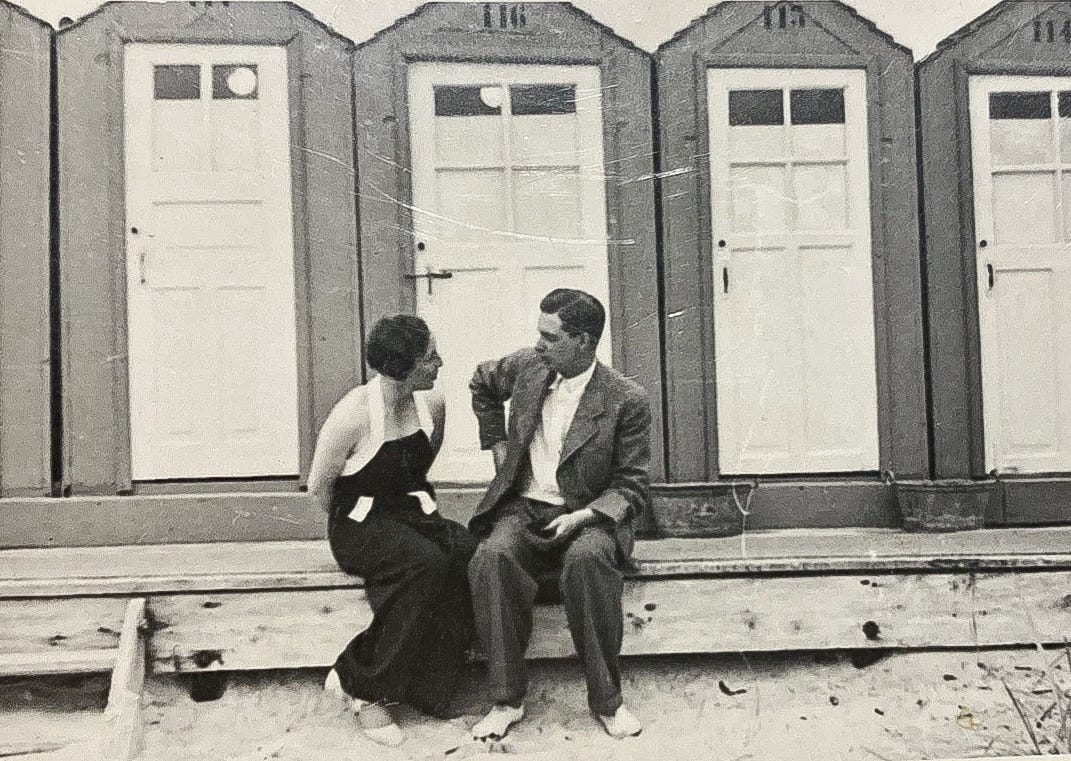
Over in Germany, pre-war, it’s all huts now and a touch of glamour too. Someone has had the foresight to annotate this photo so we know the date and location.
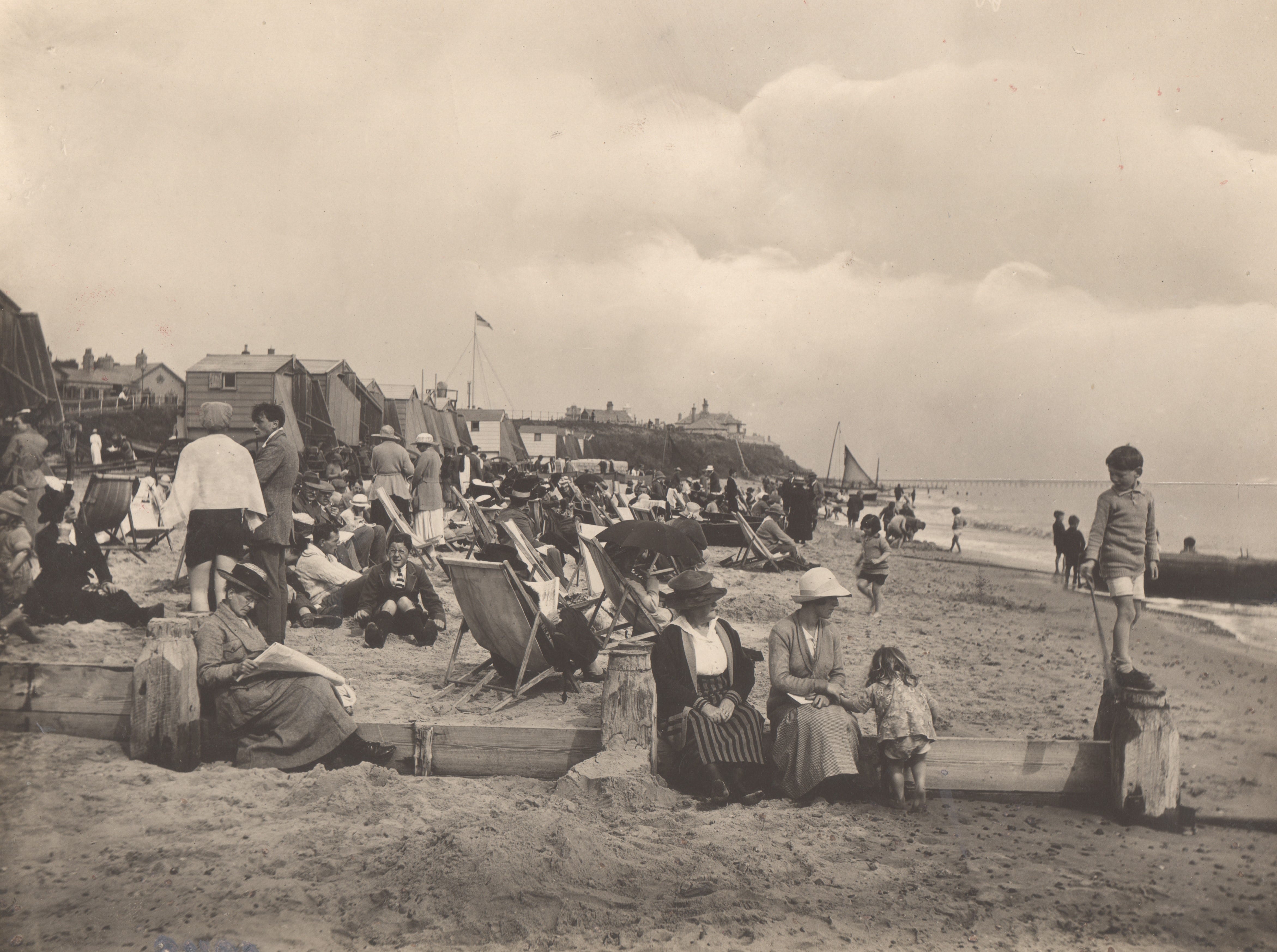
Back to the UK and moving around the coast, we are heading north and east and going further in time. First stop is Southwold, in Suffolk. The earliest of these two photos was the very first vintage photo I bought. An original Francis Frith from around 1880. The bathing machines are still in active use, with some nice details too. Notice those cables? This beach was too steep for horses.
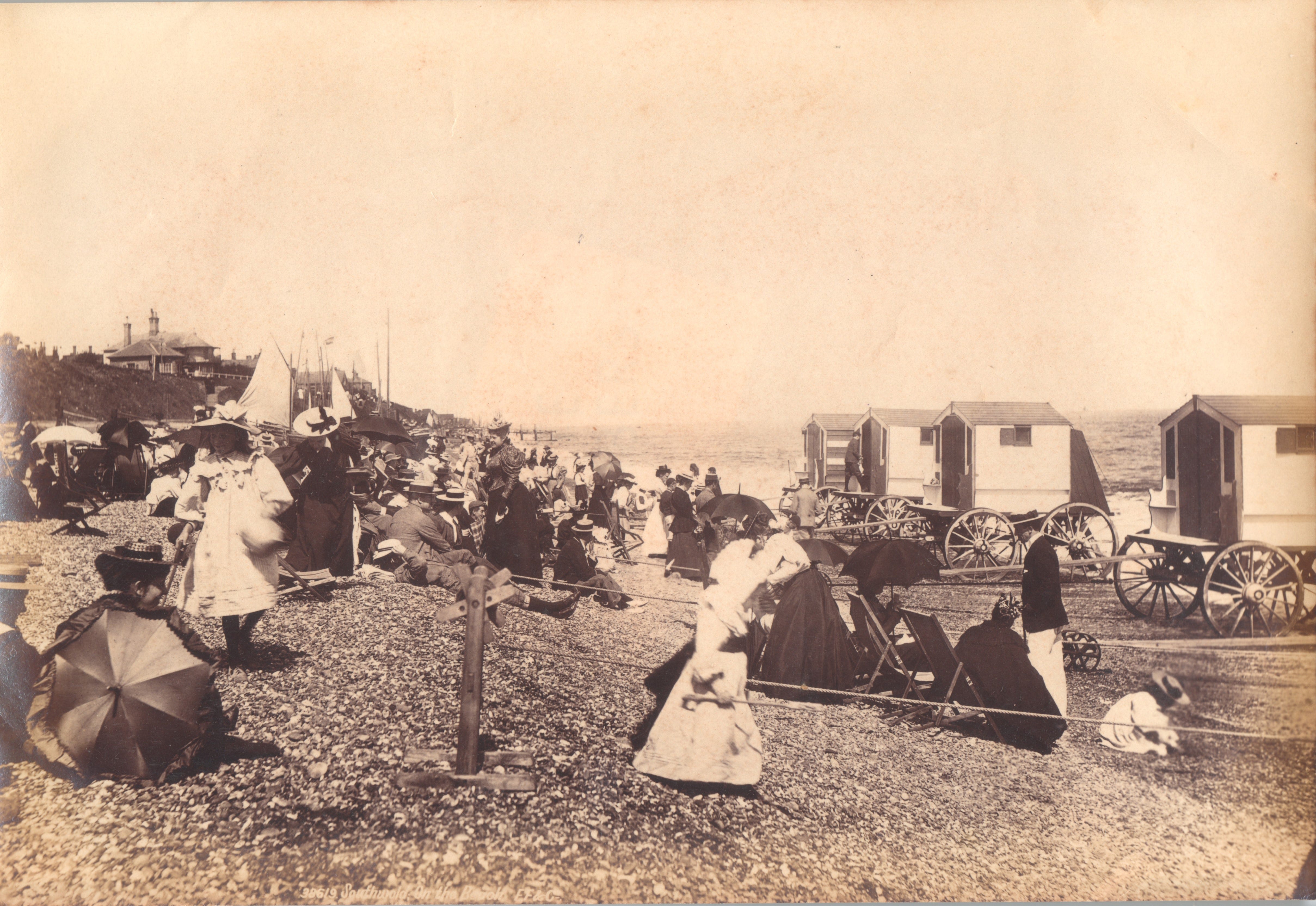
Thirty years later, around 1920, quite a lot has changed. The bathing huts are now drawn up at the top of the beach. The clothing is more comfortable.
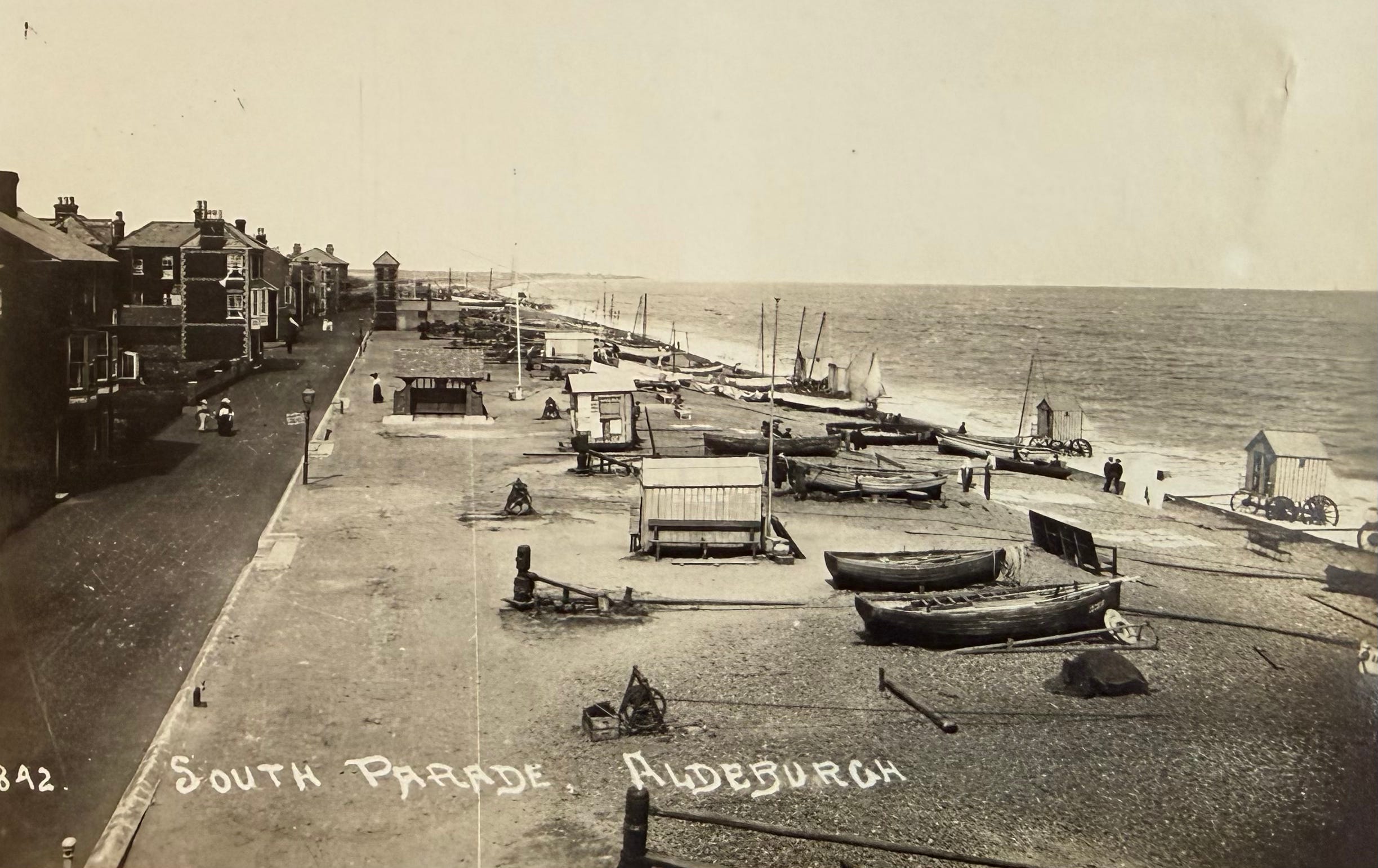
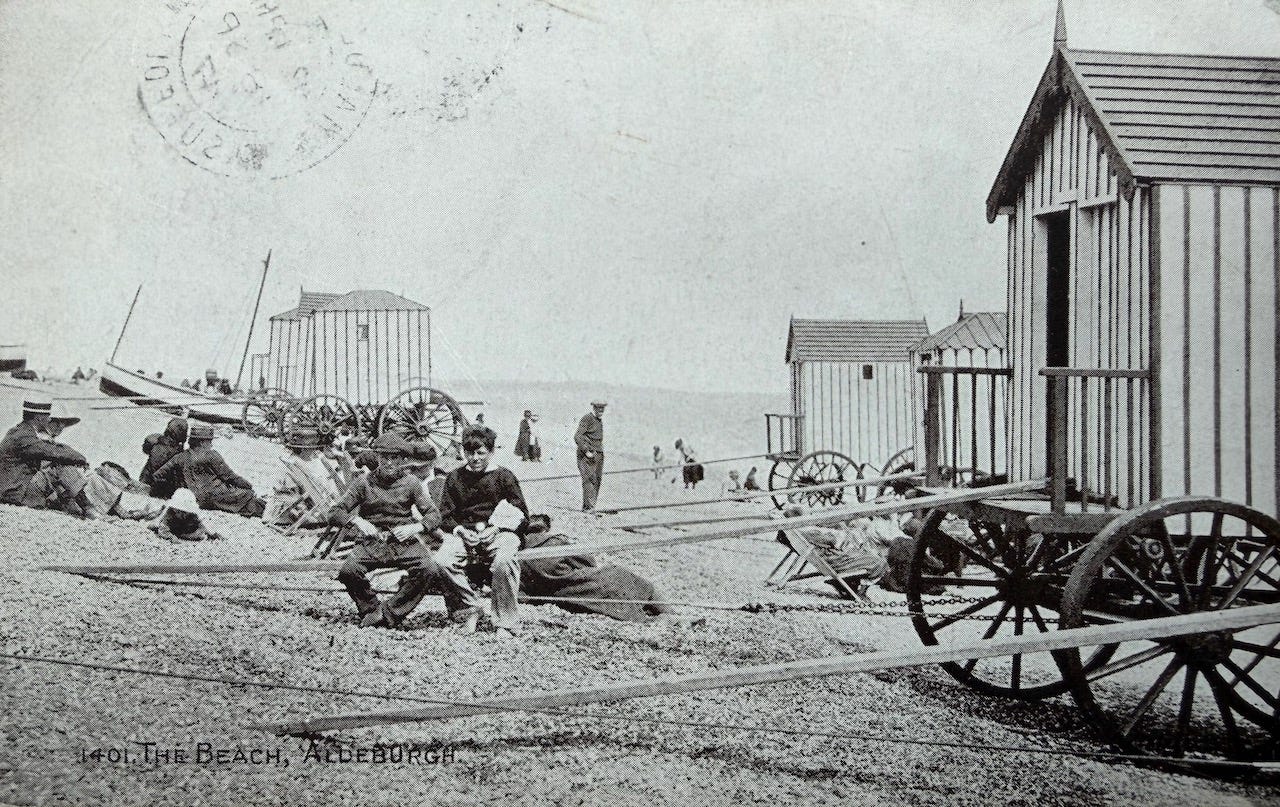
Moving slightly further up Britain’s east coast, we then come to Aldeburgh. Since I had the idea to write this article, I’ve been pleasantly distracted looking for pictures on Ebay over the last few weeks, and a couple of late arrivals here that are worth sharing. Like Southwold, Aldeburgh has a steep, shingle beach3. Winches were used to pull fishing boats out of the water, and it appears they were also used to raise and lower the bathing machines too, removing the need for horses.
We can see the bathing machines in more detail below, and the chains to pull them up the beach. I suspect those poles were used to push the huts further out into the water.
Farewell but not forgotten
I am not aware of any original bathing machines that survive today outside of museums, however as we can see, the shape and spirit of those early bathing machines live on in the dimensions and style of the huts we see today.
Once their story is known, it doesn’t take too much imagination to see these now nondescript rows of huts as a cluster of parked up bathing machines, jolly chariots waiting to be taken down to the beach. The wheels are long gone, but the steps up to the hut are an echo of an early mobile life.
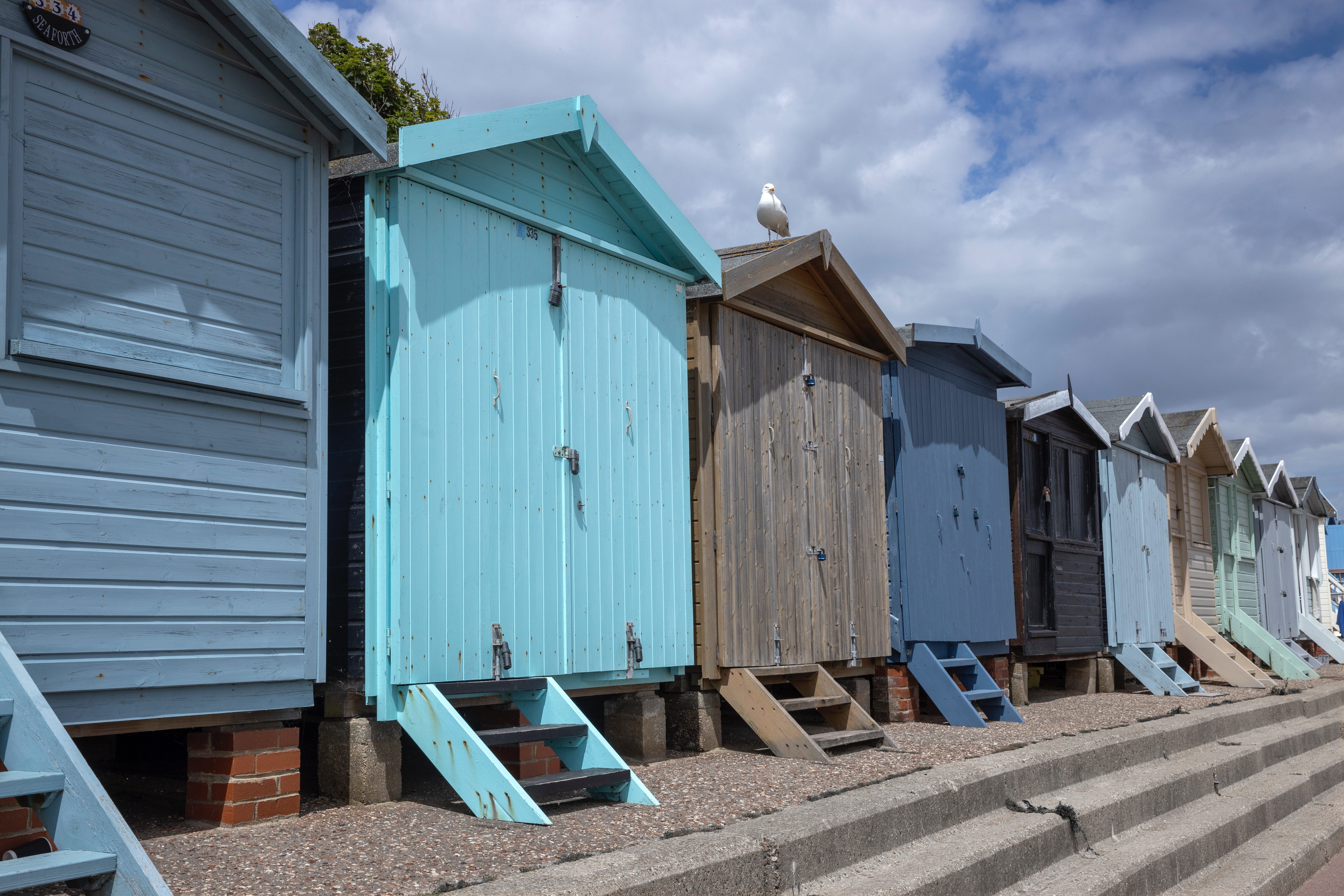
This is a charming bit of history, but it is also more than that. Whilst I take delight in looking at photographs, buildings, furniture and other items from our past, I have no desire to turn the clock back. Yet looking carefully at what has gone before does inspire and teach me. I leave you with three thoughts:
These bathing machines were designed and built to survive harsh conditions. The quality of wood and the construction had to be excellent. Regular maintenance was required. It would have been hard work dragging these heavy objects over sand and gravel. Yet they survived and evolved over many decades.
These were built entirely for the purposes of giving people pleasure. There is very little true “utility value” in a hut that gets rolled into the sea. Whilst we strive to make something “useful” when we work in wood, the true purpose of the hobby woodworker is simply the pleasure of doing it. As it often is for writing. Some of the best moments in life are when the pursuit of pleasure is the purpose.
Looking more closely at what is around us reveals puzzles and stories. When we look for the answers to the question “why is that there?”, “why is this that shape?” or “what happened next?”, we might discover something that surprises and delights us. We may even decide to write an article about it…
The daylight hours are increasing, it must stop raining soon, and my own joints are getting stronger each day. I will be returning to my woodworking journey before too long.
In the meantime, let me know what echoes from the past and stories you are learning from.
This article is one in a series that is part of a rather random walk as I seek to improve my woodworking skills from hacker to craftsman. Along the way, I’m exploring the motivations, lessons and pleasures from a world of creating, looking, reading, taking photographs and whatever else catches my fancy. Take a look at my prior articles or posts if you want to know how I got here. If you are not already on board, I’d be thrilled if you chose to join me along the way by subscribing below - no ticket (or fees) required.
But never modern prints.
Note how the tree has grown up over the years.
Aldeburgh is also the one beach of all these that I have actually swum from.
Fantastic Article - Great pictures.
Wonderful pictures